In the Netherlands, my languages began to get tangled. I would start a sentence in Slovak and finish with whichever word arrived first. Colombine found this entertaining. Lu Cia said she understood me best when I stopped correcting myself. I decided to put that to the test.
Illustrated fiction inspired by original Travel2City photographs. Four imagined moments from different journeys, rather than a one-day itinerary.
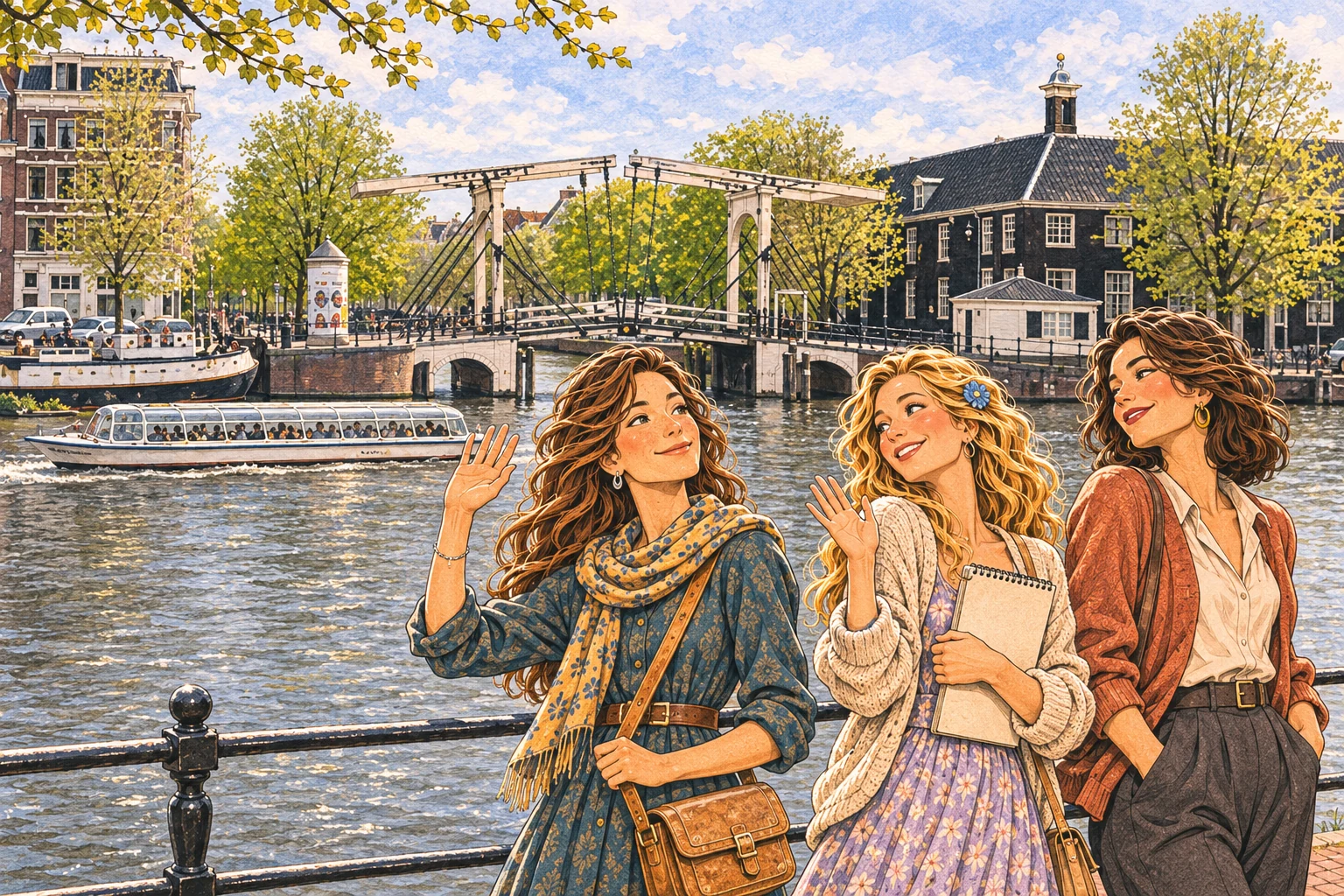
A long glass-roofed boat was passing beyond the black railing. I wanted to say something about the bridge, but out came, “Pozri, the bridge, it's so…” I never finished the sentence. Someone on the boat raised a hand, and I waved back without thinking. Colombine joined in. Lu Cia watched us with a smile, as though we were conducting a highly technical conversation. The boat moved on, its little waves breaking up the reflection of the white bridge. “Excellent pronunciation,” Colombine remarked. I looked at my raised hand. This time, there really was nothing to correct.
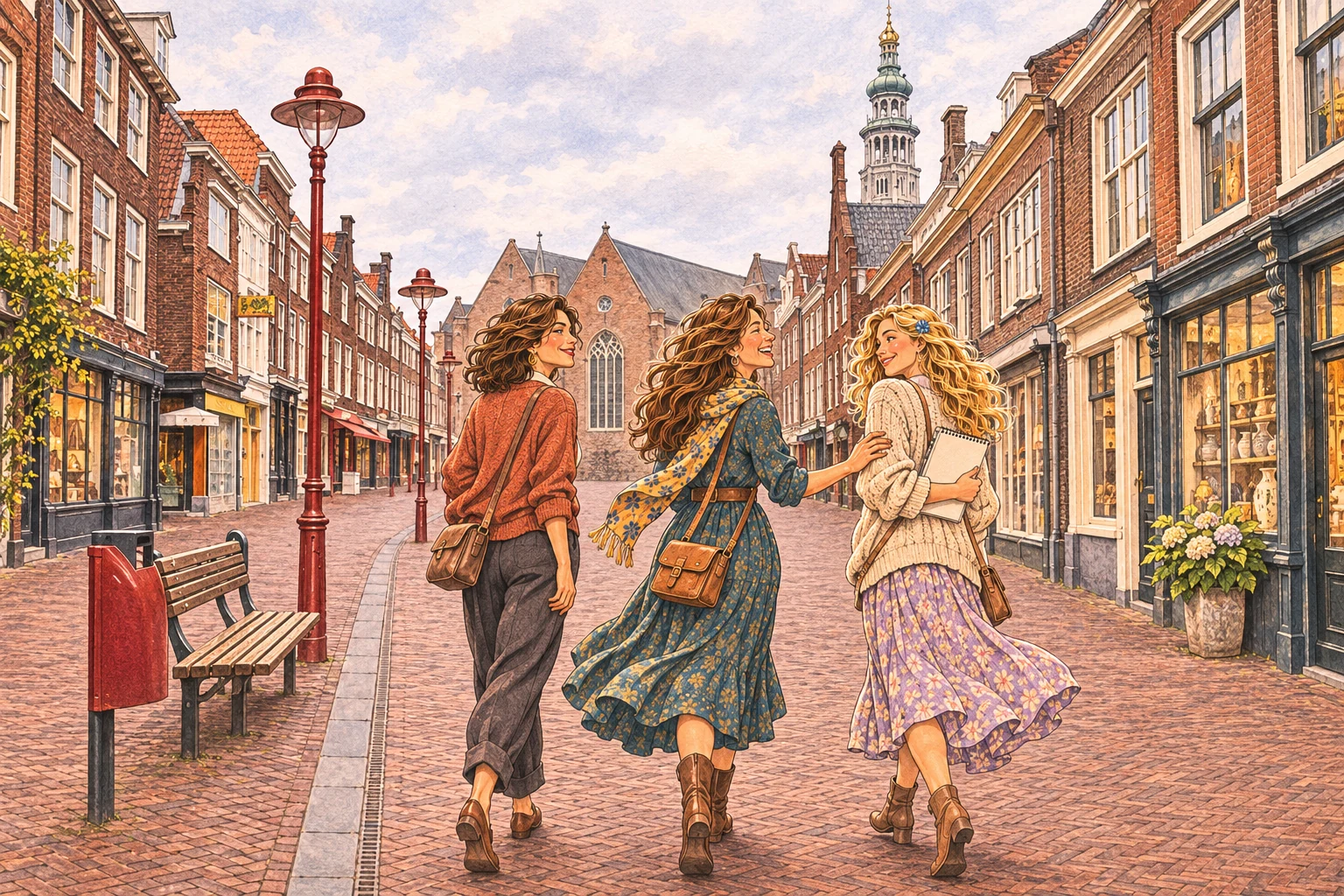
In a little street in Middelburg, Colombine was walking half a step faster than me. I wanted to look at the red lamp, the windows, the tower, and still keep up with our conversation. “Slow, prosím,” I blurted out, lightly catching her sleeve. She turned, repeated my two words with a perfectly serious face, and slowed down so thoroughly that I nearly walked into her. Lu Cia laughed first. Then all three of us were laughing. We walked closer together, the paving setting a much nicer pace. I never finished the sentence. Colombine waited for me anyway.
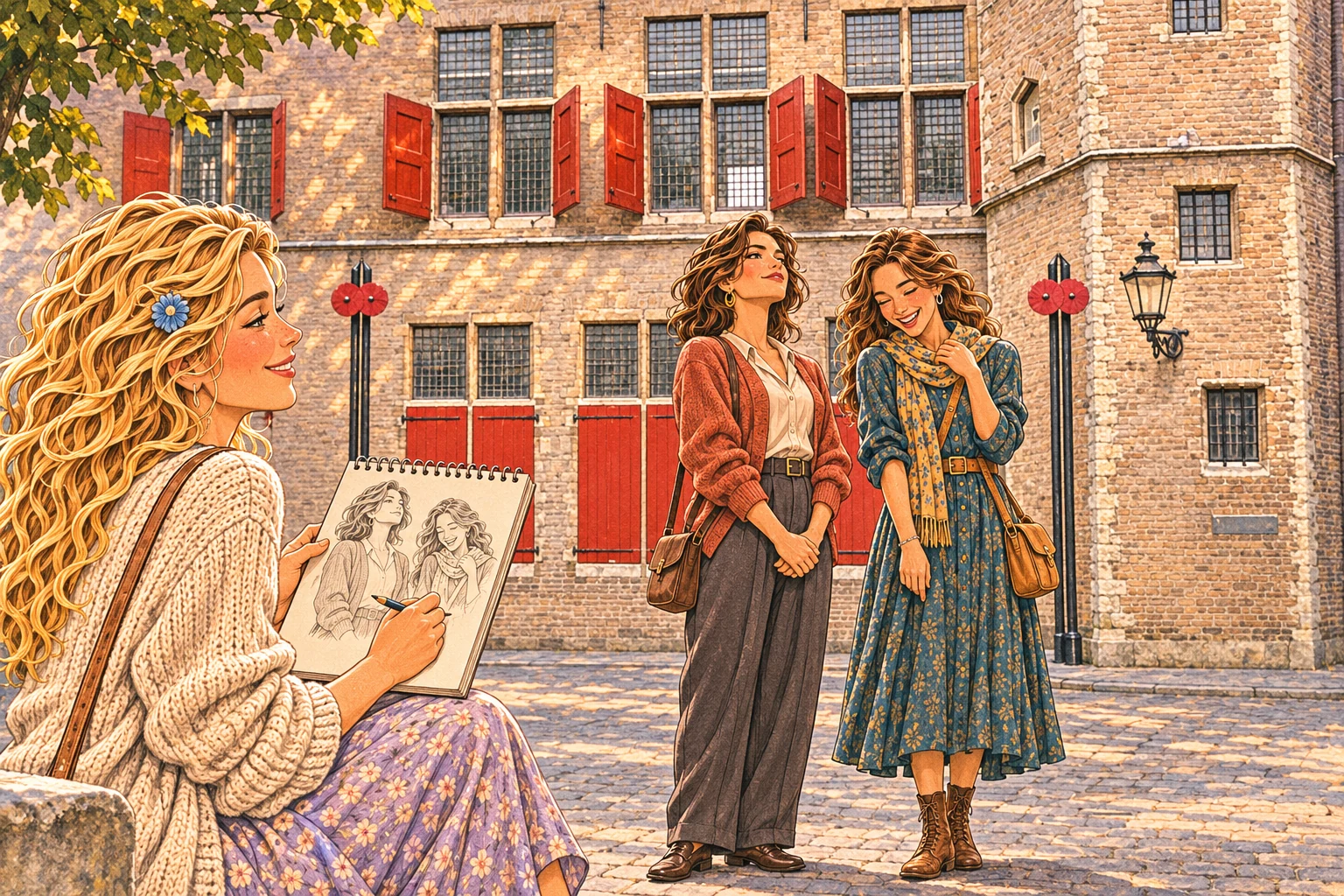
In front of the red shutters, Colombine opened her sketchbook. “Just a moment,” she asked. Lu Cia clasped her hands and stood so solemnly that a gilded frame would have suited her. I tried to copy her. I lasted about three seconds. One corner of my mouth escaped, then the other, until I could only lower my head and laugh into my scarf. Colombine looked up over the sketchbook. “Exactly like that. Don't move.” This was, of course, an impossible request. Lu Cia still looked ceremonial, but her shoulders gave her away. In the end, the drawing caught something far more accurate than our obedient poses.
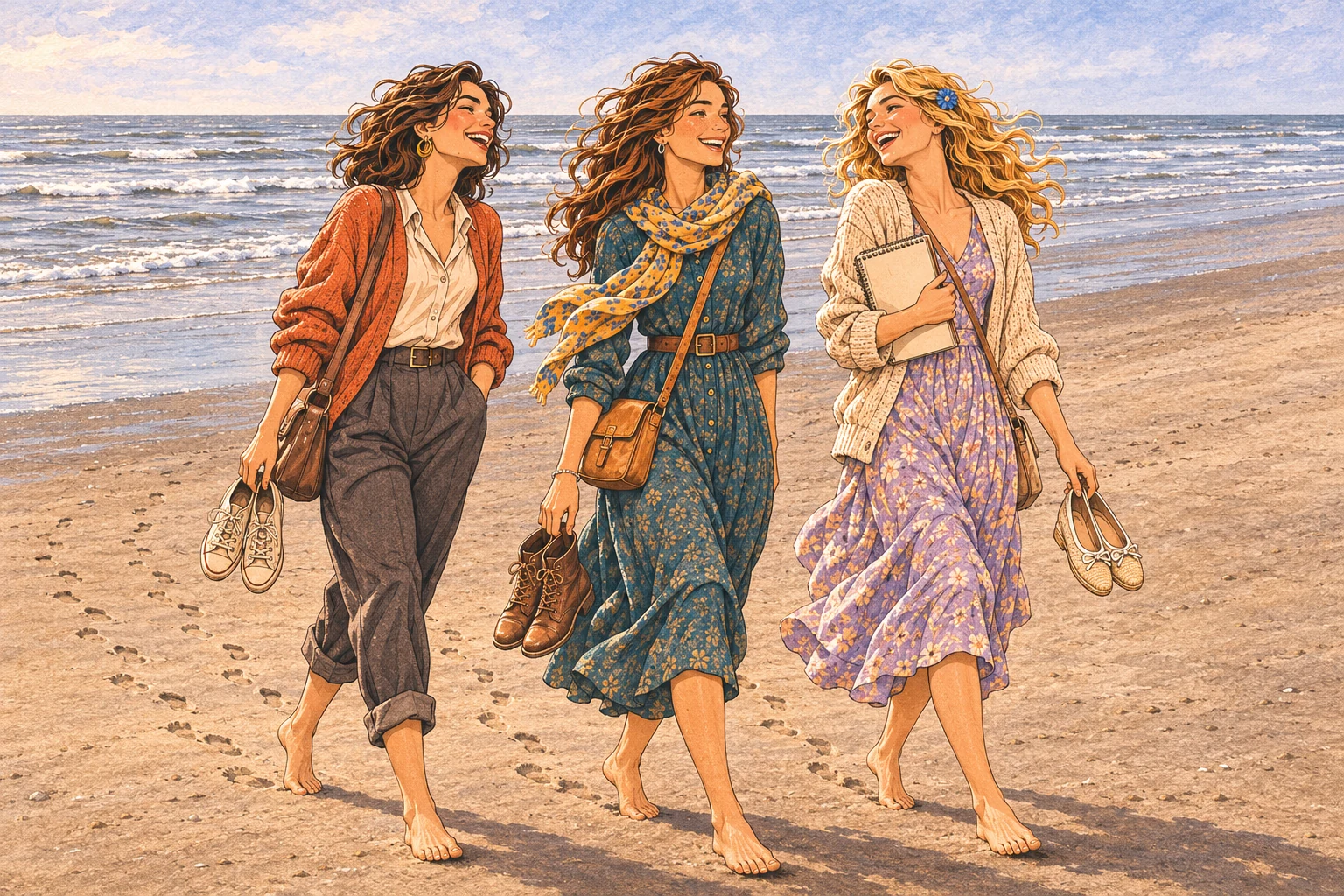
In Zandvoort, we took off our shoes. The sand was cold, and my first step produced a sound that belonged to none of my languages. Lu Cia looked at me. Colombine made no attempt to keep a straight face. I carried my boots in one hand and tried to walk with the dignity of a woman who had planned every detail of this. I failed. We laughed, leaving three trails of footprints behind us, each slightly different. The sea lay ahead, our shoes were nowhere near our feet, and the notebook was safe in my bag. For this moment, I didn't need to find the right word.
“We understood each other anyway.”
From notebook to book
The Map with No Last Page
The world of Travel2City continues between the covers of a book. Discover The Map with No Last Page and more illustrated journeys.