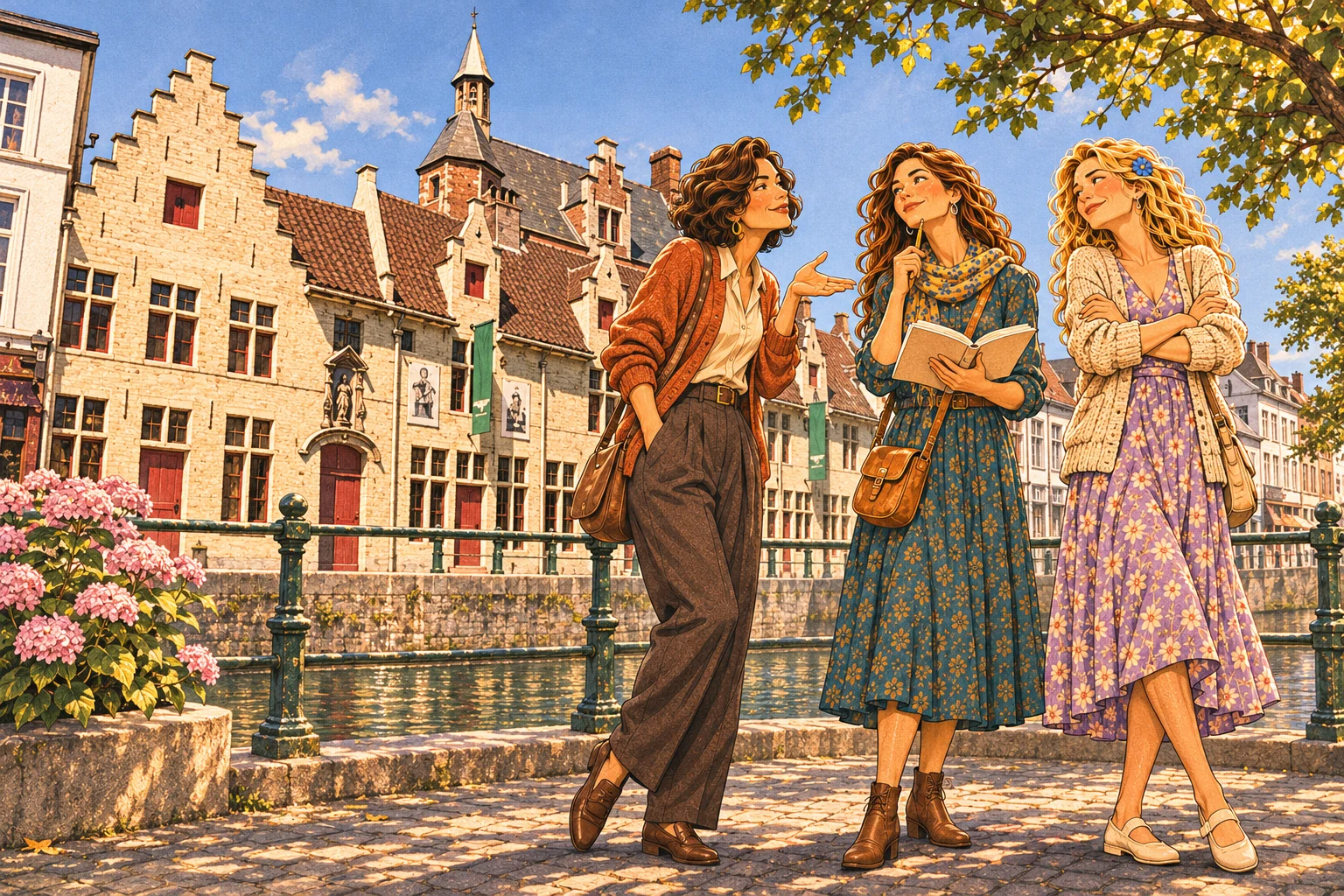
“What do you call this?” Mea asked. Colombine looked around the square and Lu Cia at the facades. Mea shook her head. She did not mean the place. She meant the way they had been moving through it all morning.
Illustrated fiction inspired by original Travel2City photographs. This is not a travel itinerary or a documentary record. Characters, dialogue, props and some composition and lighting are artistic interpretations.
Before the stepped gables, Colombine suggested “a stroll”. Mea rejected it as too general. Lu Cia tried “an expedition”, but that sounded as though they intended to conquer something. A space remained blank in the notebook. Nobody in the square seemed troubled that three visitors could not name their activity. They simply carried on doing it.
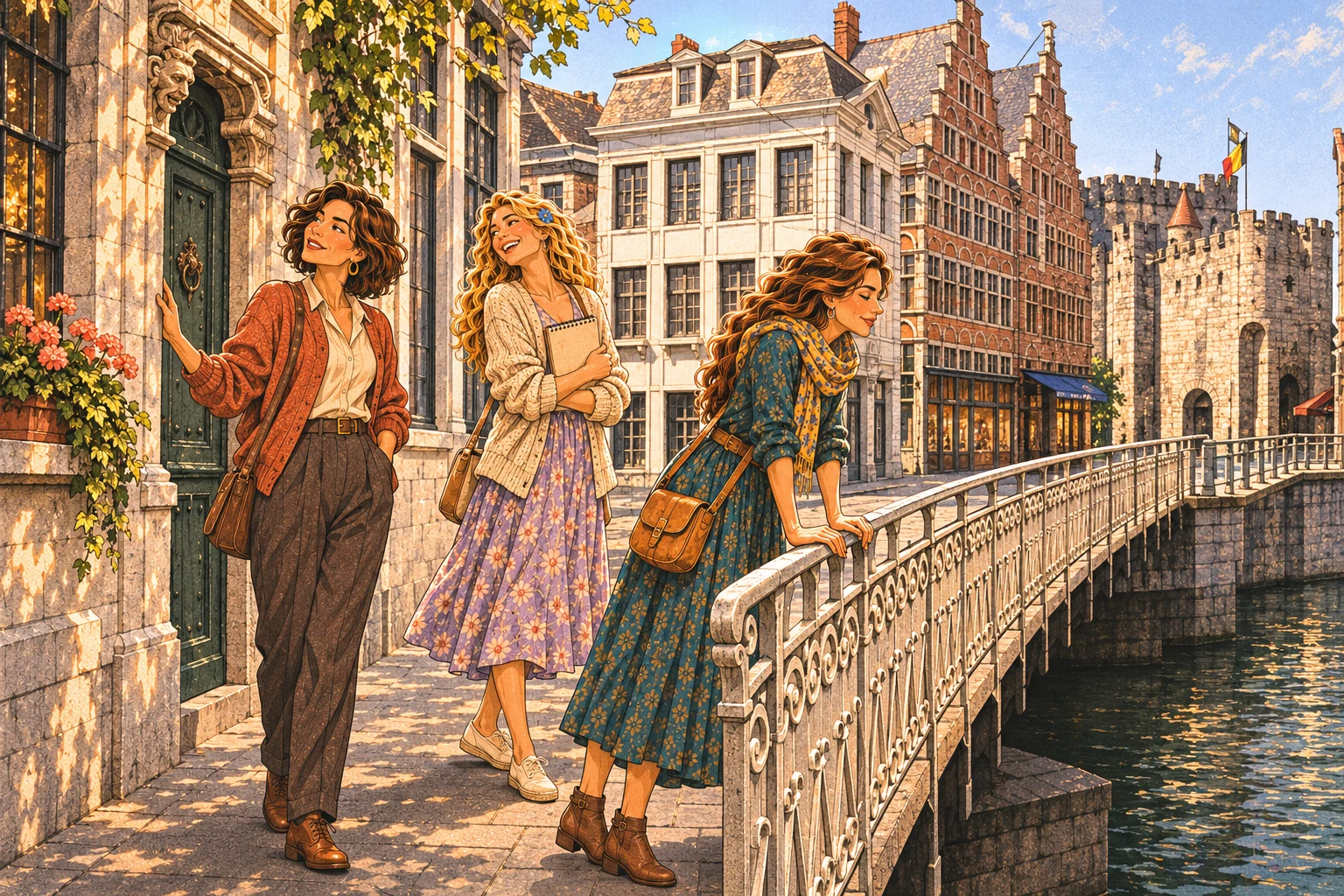
On the bridge, each stopped for a different reason. Mea watched the water, Colombine noticed a doorway, and Lu Cia turned back towards them both. Nobody pulled anybody along. Soon they were gathered around the same detail, then moved to the next. “See?” Mea said. “Exactly this. There are three of us, but every step doesn’t need a vote.”
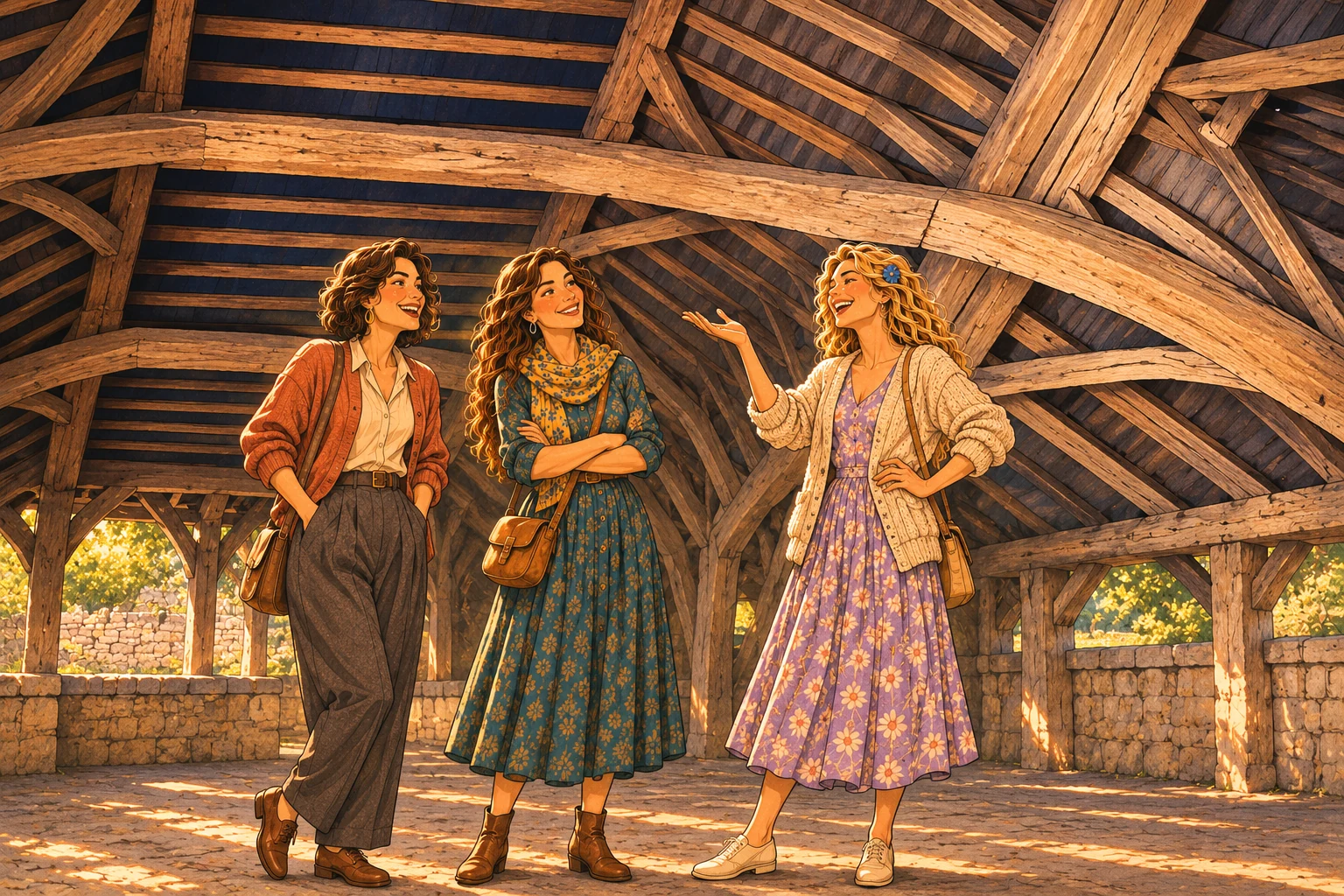
Beneath the tall timber roof, Lu Cia raised a hand. “Friendering.” Colombine repeated it slowly, as though trying a new flavour. Mea objected that they were not really wandering aimlessly. Lu Cia shrugged: you could wander among little things you had not planned to notice. This time, Mea did not leave the space in her notebook blank.
“Friendering. We’ll agree on the destination as we go.”
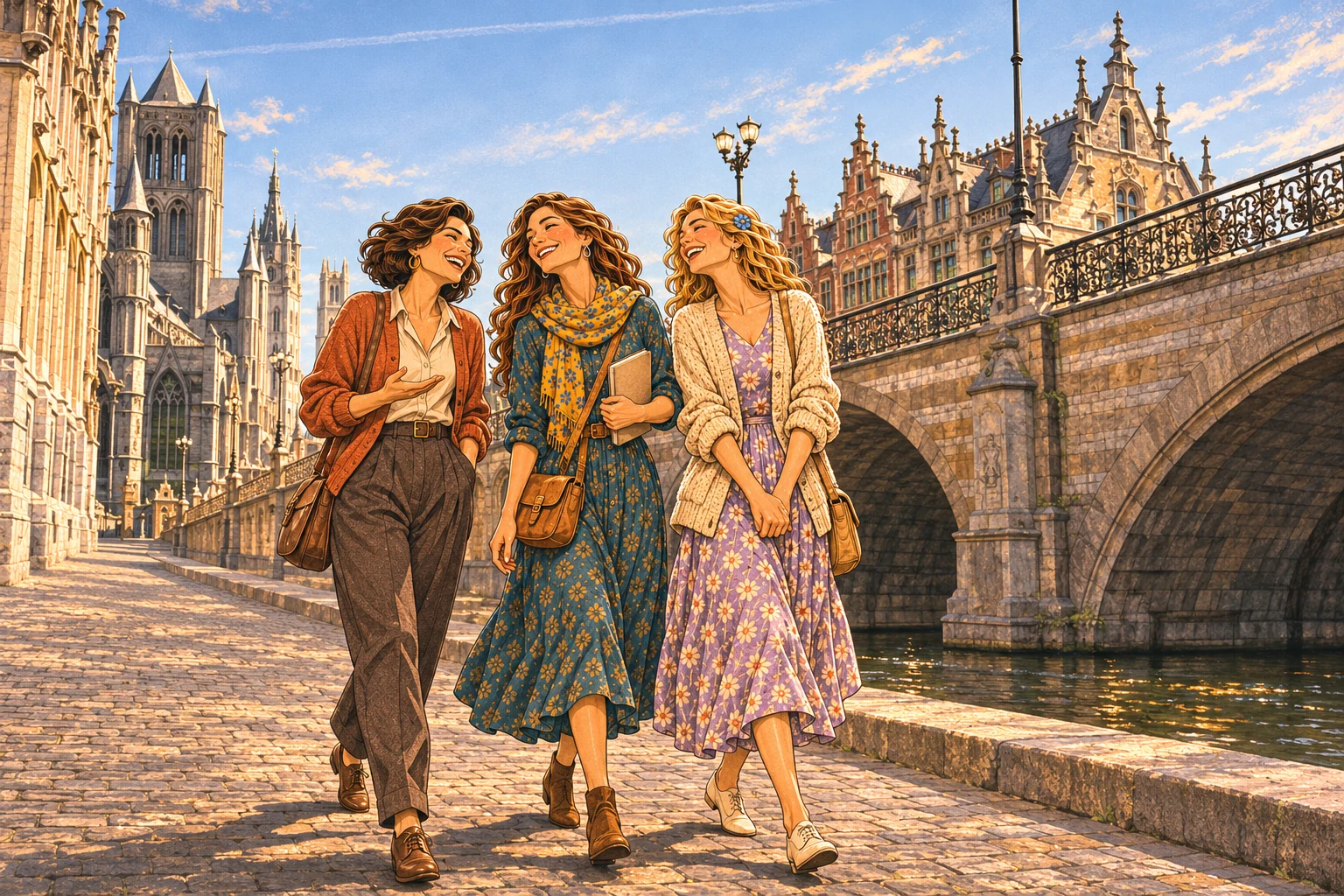
When they returned to the water, Colombine asked whether the friendering would continue after lunch. Lu Cia agreed, provided lunch was more than a vocabulary exercise. Mea closed the notebook. Their new word was already working without an explanation. By the time they had crossed the bridge, they had found three more reasons to use it.
“Food first. Then the word can develop further.”
From notebook to book
The Map with No Last Page
Travel2City journeys continue between the covers of a book. Discover our illustrated travel world.
Mea wrote down the word without a dictionary definition. A place and three names were enough. On another journey they might pronounce it differently, but they would recognise it at once: one of them would stop, and the other two would come to look instead of hurrying her along.